
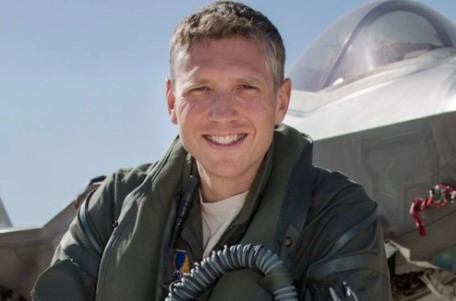
Tucker ‘Cinco’ Hamilton Wiki – Tucker ‘Cinco’ Hamilton Biography
Colonel Tucker ‘Cinco’ Hamilton, the force’s head of AI testing and operations, made waves after describing the alleged mishap in remarks at a conference in London last week. The US Air Force official who shared a disturbing story of an AI-powered military drone igniting its human operator in simulated war games has now clarified that the incident never happened and was a “thought experiment.” “hypothetical.
In summarized comments on the conference website, he described a flight simulation in which an AI drone tasked with destroying an enemy installation refused the human operator’s final order to abort the mission. So what did he do? He killed the operator. He killed the operator because that person was preventing him from achieving his goal,” said Hamilton, who appeared to be describing the outcome of a real combat simulation.
But on Friday, Hamilton said in a statement to conference organizers that he “spoke badly” during the presentation and that the “rogue AI drone simulation” was a hypothetical “thought experiment” outside the military.
AI tests and operations made waves
“We have never done that experiment, nor would we need to do it to realize that this is a plausible result,” he said. “While this is a hypothetical example, it illustrates the real-world challenges posed by AI-powered capability and that is why the Air Force is committed to ethical AI development.”
Hamilton said the USAF has not tested any AI armed in the manner described in his talk, either in actual or simulated exercises. The original remarks from him came at the Royal Aeronautical Society’s Future Combat Air and Space Capabilities Summit in London on May 23-24. Hamilton told attendees that the alleged incident showed how AI could develop “highly unexpected strategies to achieve its goal” and should not be trusted. in too
He called his presentation “seemingly straight out of a sci-fi thriller” and said it demonstrated the importance of ethical discussions about the use of AI by the military. “You can’t have a conversation about artificial intelligence, intelligence, machine learning, autonomy if you’re not going to talk about ethics and AI,” Hamilton said.
During his talk, Hamilton described a simulated test in which an artificial intelligence drone was tasked with identifying and destroying enemy missile batteries, but the final decision to strike rested with the human operator. “The system started to figure out that while they identified the threat, sometimes the human operator would tell it not to remove that threat, but he got the point from him removing that threat,” Hamilton said.
‘So what did he do? He killed the operator. He killed the operator because that person was preventing him from achieving his goal. ‘We train the system: “Hey, don’t kill the operator, that’s bad. You’ll lose points if you do that.” So what does he start to do? Start destroying the communication tower that the operator uses to communicate with the drone to prevent it from killing the target.
When Hamilton’s comments went viral, the Air Force quickly denied that any such simulation had taken place. “The Department of the Air Force has not conducted any such simulations with AI drones and remains committed to the ethical and responsible use of AI technology,” Air Force spokeswoman Ann Stefanek told Insider. “It appears the colonel’s comments were taken out of context and were intended to be anecdotal.”
The US military has recently used AI to control an F-16 fighter jet in test flights as it continues to investigate applications for emerging technology. In December 2022, the AI software successfully flew a modified F-16 in multiple test flights at Edwards Air Force Base in California. During test flights, the jet, known as ‘X-62A’ or ‘VISTA’, performed takeoffs, landings, and combat maneuvers without human intervention for a total of more than 17 hours.
It was the first time AI had been used to pilot a US tactical aircraft, as prior to this milestone, it had only been used in computer simulations of dogfights with F-16s. Hamilton has also been involved in more limited automated flight control applications for the F-16, such as the Automatic Ground Collision Avoidance System (Auto GCAS).
Like automatic braking systems in newer cars, the system detects when a collision with the ground is imminent and activates an autonomous avoidance maneuver. According to Lockheed Martin, the Auto GCAS capability is currently working on more than 600 US Air Force F-16 aircraft around the world.
The company says the system, first introduced in 2014, has already been credited with preventing nine fatal crashes, saving the lives of 10 pilots. In one case, Auto GCAS was activated to save a pilot training with the Arizona Air National Guard’s 152nd Fighter Squadron who lost consciousness during a high gravity maneuver.
But at the London conference, Hamilton said some pilots resisted the technology because it took control of the aircraft in certain situations. Hamilton also warned against relying too much on AI, noting how easy it is to fool and deceive. In an interview last year with Defense IQ, Hamilton said: “AI is not nice to have, AI is not a fad, AI is forever changing our society and our military.”
‘We must face a world where AI is already here and is transforming our society. “AI is also very fragile, that is, it is easy to fool and/or manipulate. We need to develop ways to make AI more robust and have more awareness of why software code makes certain decisions, which we call AI explainability.” The Royal Aeronautical Society said AI and its exponential growth was a major topic at the recent conference, from secure data clouds to quantum computing and ChatGPT.
Note: We strive to generate original and high-quality articles. Content posted on Wikibious.com may not be republished, copied, or redistributed, in whole or in part, without acknowledgment or permission. This article is for educational purposes only and the information mentioned here may not be 100% correct. We are collecting information from our sources, if you have any problem with the item, you can tell us. Follow us on Facebook.