
Hurricane Henri: What Is a Storm Surge? A Meteorologist Explains
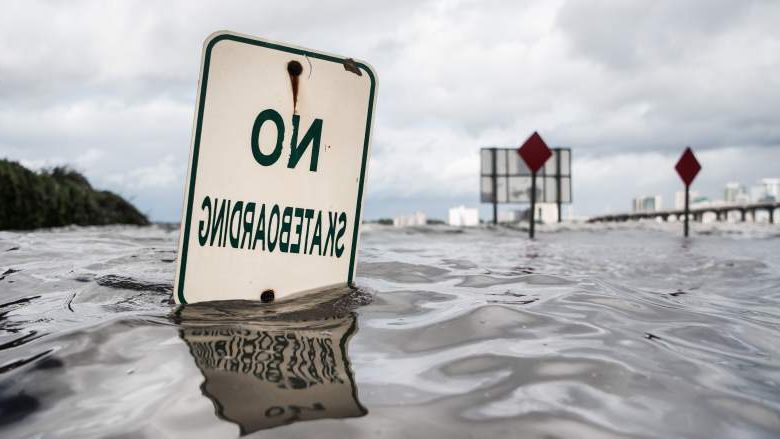
The St. Johns River rises from flooding caused by Hurricane Irma’s storm surge on September 11, 2017, in Jacksonville, Florida.
Forecasters warned of the potential for a dangerous storm surge how Henri got stronger in a hurricane on a road that is expected to catch its eye on or near New York’s Long Island and in New England on August 22, 2021. The storm was expected to hit the coast on a full moon when high tides are already over high than normal. Here’s how Anthony Didlake Jr., a Penn State meteorologist, recently explained how storm surges form and why it’s so dangerous.
What is a storm surge?
Of all the dangers hurricanes bring, storm surge is the greatest threat to life and property along the coast. It can sweep houses off their foundations, flood riverside communities miles inland, and breakthrough dunes and levees that normally protect coastal areas from storms.
When a hurricane hits the shore, it pushes a large volume of ocean water to shore. This is what we call a storm surge.
This rise appears as a gradual rise in the water level as the storm approaches. Depending on the size and path of the hurricane, storm surge flooding can last for several hours. Then back off after the storm passes.
Water level heights during a hurricane can reach 20 feet or more above normal sea level. With powerful waves on top, the storm surge from a hurricane can cause catastrophic damage.
What determines the intensity of the storm surge?
The storm surge begins over the open ocean. The strong winds of a hurricane push the ocean waters and cause the water to pool under the storm. The low air pressure from the storm also plays a small role in raising the water level. The height and extent of this mound of water depend on the strength and size of the hurricane.
As this mound of water moves toward shore, other factors can change its height and extent. Examples of Hurricane Storm SurgeExamples of two types of the continental shelf and the effect on storm surge.2019-09-04T21: 06: 42Z
the depth of the seabed it is a factor.
If a coastal area has a seafloor that moves away from shore, a higher storm surge is more likely than an area with a steeper slope. The gentle slopes along the Louisiana and Texas coasts have contributed to some devastating storm surges. The wave of Hurricane Katrina in 2005 broke the levees and flooded New Orleans. Hurricane Ike Storm surge 15 to 17 feet and waves washed away hundreds of homes off the Bolivar Peninsula in Texas in 2008. Both were large and powerful storms that struck vulnerable places.
The shape of the shoreline can also influence the swell. When a storm surge enters a bay or river, the land’s geography can act as a funnel, sending the water even higher.
Read Also: Who is Christina Pushaw? Wiki, Biography, Age, Family, Twitter Account Suspend, Instagram
Other factors that shape storm surge
Ocean tides, caused by the gravity of the moon and the sun, can also strengthen or weaken the impact of storm surge. Therefore, it is important to know the timing of the local tides compared to the arrival of the hurricane.
At high tide, the water is already high. If it makes landfall at high tide, the storm surge will cause even higher water levels and bring more water inland. The Carolinas saw those effects when Hurricane Isaías struck near high tide on August 3, 2020. Isaías caused a storm surge of approximately 4 feet in Myrtle Beach, South Carolina, but the water level was more than 10 feet above normal.
The COMET / UCAR Program and the National Meteorological ServiceHow storm surge and high tide add to coastal flooding. Rising sea levels is another growing concern influencing storm surge.
As the water heats up it expands, and that sea level has risen slowly over the past century as global temperatures have risen. Fresh water from melting ice sheets and glaciers also contributes to rising sea levels. Together they raise the height of the ocean background. When a hurricane hits, the higher ocean means that storm surge can carry water further inland, with a more dangerous and widespread effect.
[Get our best science, health, and technology stories. Sign up for The Conversation’s science newsletter.]
Anthony C. Didlake Jr., Assistant Professor of Meteorology, Penn State
This article is republished from The Conversation under a Creative Commons license. Read the Original article.